
Patek Philippe Golden Ellipse 5738P-001
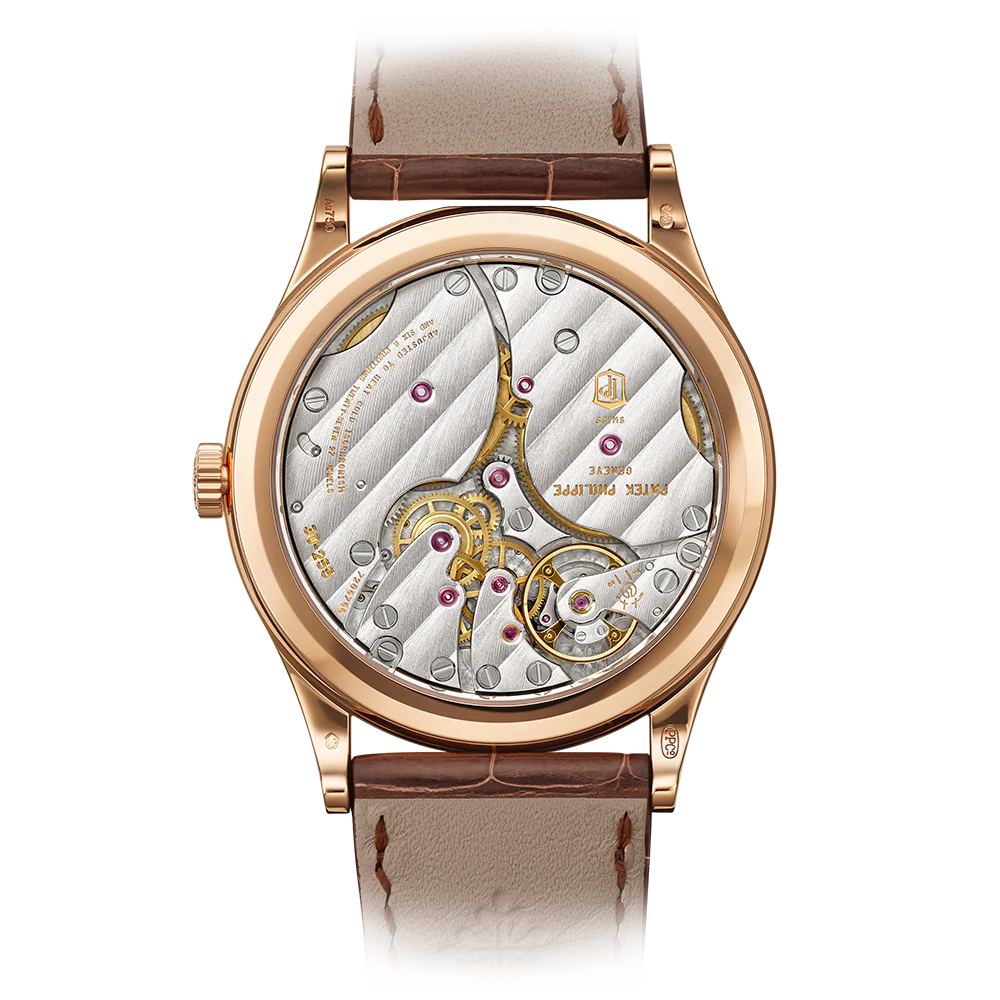
An elliptical case that bridges the gap between a circle and a rectangle. A captivating blue gold dial, with gold hands and hour markers appearing to float over its depths. When Patek Philippe introduced the Golden Ellipse in 1968, it marked a bold departure from traditional watch designs. Yet, its innovation transcended fleeting trends, offering an inner harmony that delighted the eye. The design drew inspiration from the "golden section," a principle discovered by ancient Greek mathematicians. This "divine" proportion, represented by the ratio 1:1.6180, has been the foundation of some of history's most iconic works of art and architecture.
Original: $71,144.16
-70%$71,144.16
$21,343.25Patek Philippe Golden Ellipse 5738P-001
An elliptical case that bridges the gap between a circle and a rectangle. A captivating blue gold dial, with gold hands and hour markers appearing to float over its depths. When Patek Philippe introduced the Golden Ellipse in 1968, it marked a bold departure from traditional watch designs. Yet, its innovation transcended fleeting trends, offering an inner harmony that delighted the eye. The design drew inspiration from the "golden section," a principle discovered by ancient Greek mathematicians. This "divine" proportion, represented by the ratio 1:1.6180, has been the foundation of some of history's most iconic works of art and architecture.
Product Information
Product Information
Shipping & Returns
Shipping & Returns
Description
An elliptical case that bridges the gap between a circle and a rectangle. A captivating blue gold dial, with gold hands and hour markers appearing to float over its depths. When Patek Philippe introduced the Golden Ellipse in 1968, it marked a bold departure from traditional watch designs. Yet, its innovation transcended fleeting trends, offering an inner harmony that delighted the eye. The design drew inspiration from the "golden section," a principle discovered by ancient Greek mathematicians. This "divine" proportion, represented by the ratio 1:1.6180, has been the foundation of some of history's most iconic works of art and architecture.